Optimizing Resource Planning via Seasonal Weather Analysis in Climate-Sensitive Regions
DOI:
https://doi.org/10.67868/aq46aj11Keywords:
Temperature Patterns, Rainfall Analysis, Station-level Climate Data, Agricultural Planning, Water Resource Management, Python Data AnalysisAbstract
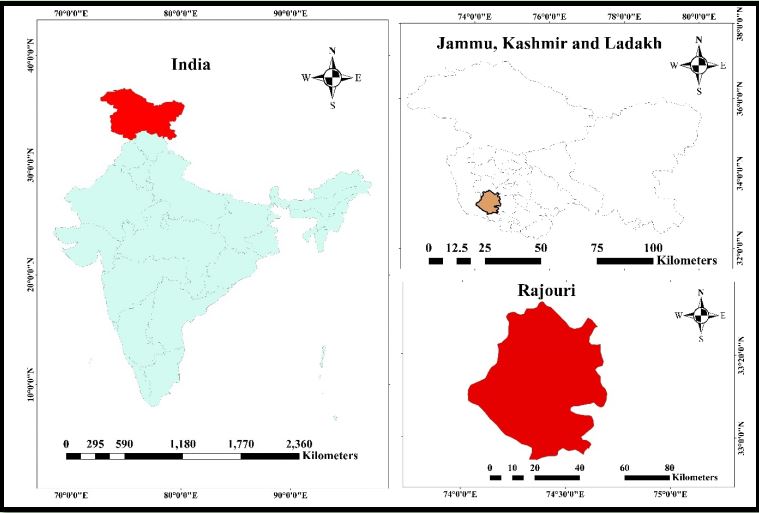
Climate variability significantly influences agricultural productivity, water availability, and environmental planning worldwide. Understanding seasonal fluctuations can help address budgeting, planning, and resource allocation issues in advance. This study presents a comprehensive analysis of temperature and rainfall patterns in District Rajouri, Jammu and Kashmir (India) for the year 2023, emphasizing seasonal variability and its implications for short-term agricultural and water resource planning. Monthly data, including maximum and minimum temperatures, rainfall, relative humidity, sunshine duration, wind speed, and evapotranspiration, were collected from the Indian Meteorological Department (IMD), Krishi Vigyan Kendra at Tandwal, Rajouri. Using descriptive statistics and graphical tools in Python, seasonal fluctuations in various weather parameters were analysed. The findings highlight significant intra-annual variability, with peak temperatures and evapotranspiration during pre-monsoon months and maximum rainfall during the monsoon season. While the study focuses on a single year and avoids long-term seasonal variability interpretations, insights provide valuable information for short-term agricultural and water resource planning. The study recommends future research incorporating multi-decadal datasets for seasonal variability assessment. The study also evaluates the interrelationship among key meteorological parameters using statistical analysis to better understand seasonal climatic behaviour and its implications for agricultural and water resource planning.
References